

Ep. 386: The Rental Reality Check – Why Slower Rent Increases Doesn’t Mean Improved Affordability
Ep. 386: The Rental Reality Check – Why Slower Rent Increases Doesn’t Mean Improved Affordability
🎙️In this episode, Cate, Dave and Mike look at the latest rental figures, which questions whether Australia’s rental crisis may finally be easing. They ask if households are actually better off, or whether people have simply reached the limit of what they can pay.
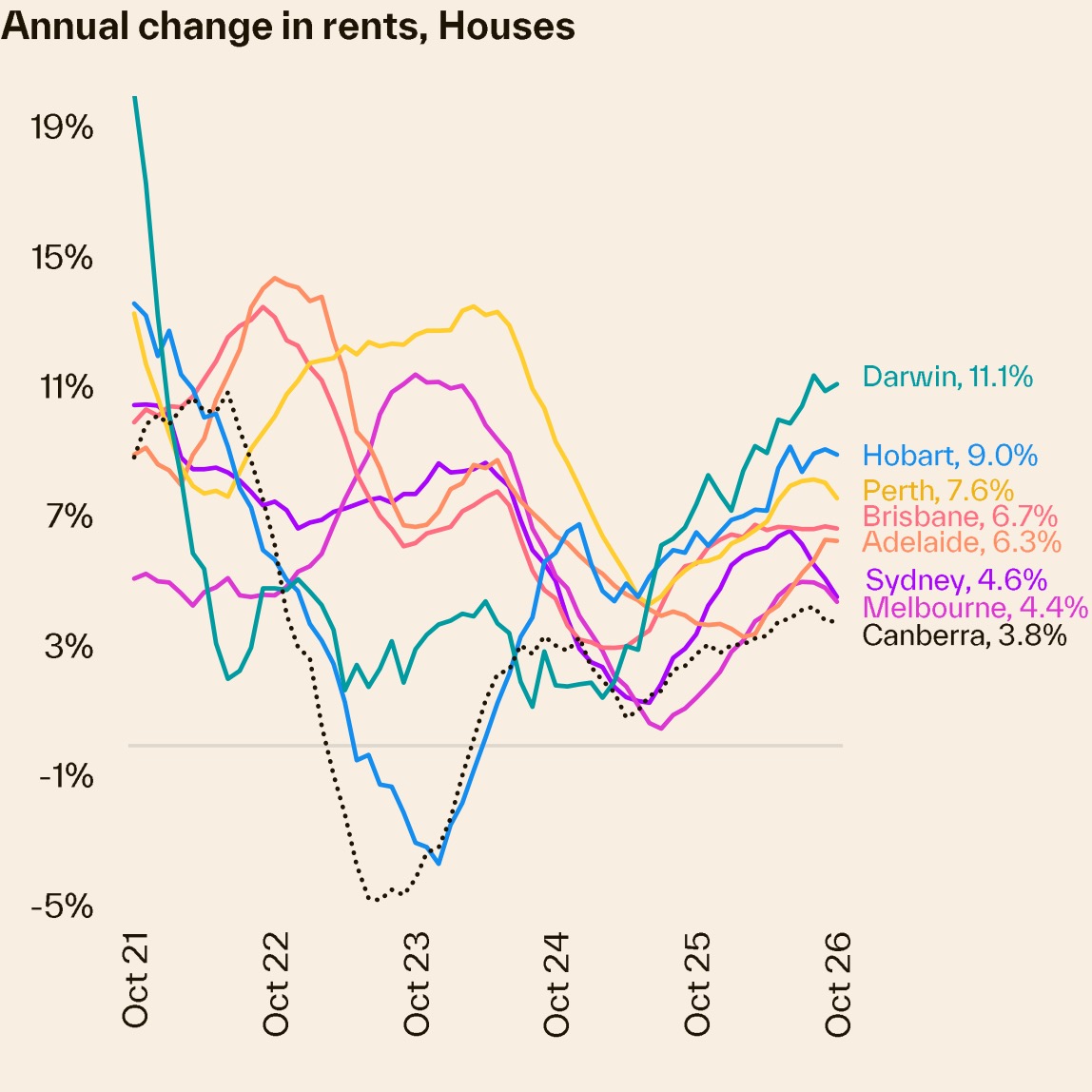
📊 The headline numbers do look encouraging. Cotality’s September-quarter review showed national rents rising just 0.5%, down from 1.6% in June and 2.1% in March. The national vacancy rate climbed to 2.1%, its highest level since January 2025. But rents are still up 5.5% annually, the national median sits at $713 per week, and unit rents have jumped 44.3% over five years. Domain found asking rents flat in Brisbane, Melbourne and Perth, even with vacancy rates of 0.7% in Brisbane and 0.4% in Perth. Why would rents stall in markets that tight?
Part of the answer may lie in Everybody’s Home’s new report, No Room to Move. It surveyed 1,150 people, and 76% said an extra $20 a week in housing costs would force them to make sacrifices. Another 41% said they would need to cut back on essentials or couldn’t afford the increase at all. The trio are careful about what an advocacy survey can and can’t tell us, but the findings on skipped medical appointments, reduced energy use and renters afraid to ask for repairs are hard to ignore.
Mike explains suppressed household formation: people who would ideally live on their own end up sharing, or staying with their parents longer. The need for housing hasn’t gone away, but fewer households are showing up in the market. The National Housing Supply and Affordability Council found adults per household rose from 2.08 to 2.10 between July 2024 and July 2025. Dave also covers other explanations, including slower migration, investor supply and renters becoming homeowners.
🏡 Then comes the construction paradox…. softer prices can make new projects unviable when building costs sit about 51% above pre-pandemic levels. June-quarter completions of 47,168 annualise to roughly 189,000 dwellings, well short of the Housing Accord’s 240,000 target. Could lower prices today mean fewer homes tomorrow?
The trio finish by setting out what genuine improvement would look like, and each nominates the one statistic they think Australians should be watching over the next 12 months.
This is a considered episode on rents, financial stress, household formation and construction feasibility. It’s a reminder that a rental market can look healthier on paper while the people living in it are quietly making harder compromises.
And our gold nuggets……..
Mike Mortlock’s gold nugget: “You can see a number that sounds promising, but it can be misleading”
Dave Johnston’s gold nugget: Dave challenges listeners to think about whether mortgage bolders are drawing down savings, or utilising buffers. Which takes things back to the point of the episode; it is tougher for renters. “We need to be tartgeted to the people who really need it,”
Cate Bakos’s gold nugget: Cate mentions segmentation. Looking beneath the headline data is important, and segmentation counts for a lot.
Related episodes:
352: The Housing Supply Challenge – Why Australia Can’t Build Homes Fast Enough
373: After the Budget – A Deep Analysis of Who are the Winners, the Losers and What Happens Next
378: Property Investors Pivot to Yield and Diversification, But Is It the Right Call?
Upcoming ep: #387: The Failed France Experiment: Why Tax Incentives for New Builds Don’t Fix Housing Supply